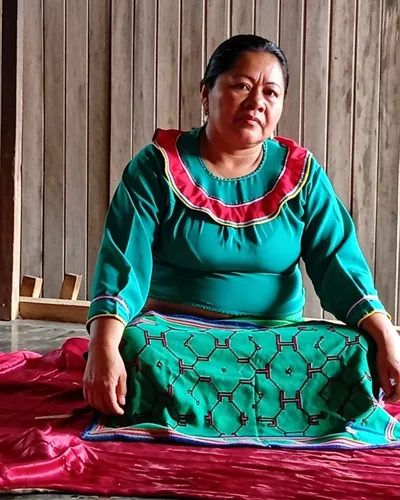
Diamilda Bardales Vásquez
Embroiderer · painter · jeweller
Pueblo Nuevo del Caco
Her signature is mayakené — the curving designs of rivers and the anaconda, the pattern that comes from the head of the serpent where the kené was first revealed.

Shipibo-Konibo artisans · Kene Rao Foundation
Every kené that passes through kene.world is made, signed and paid at its source.
We work with the Kene Rao Foundation, a collective of embroiderers and painters in and around Pucallpa working to preserve Shipibo-Konibo design tradition — in communities between twelve and twenty hours by boat from the city.
Every piece is signed by its maker. Every piece pays its maker. Nothing is anonymous, and nothing is stylised into a nameless "artisan".
The roster
Embroiderer · painter · jeweller
Pueblo Nuevo del Caco
Her signature is mayakené — the curving designs of rivers and the anaconda, the pattern that comes from the head of the serpent where the kené was first revealed.
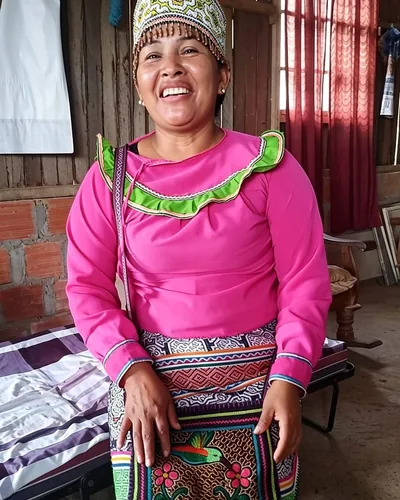
Master embroiderer
Nueva Nazareth
Wears shokené well — the oldest pattern of the Shipibo, from sho, the word for bone, and specifically the bones of the fish.
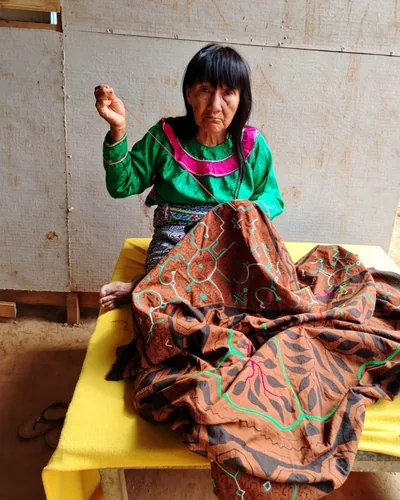
Embroiderer · painter · ceramicist
San Francisco de Yarinacocha
Embroiders, paints, makes ceramics and jewellery — a complete master of every craft her mother knew.
More artisans work with the foundation than appear here; this page grows as portraits and permissions come through from Pucallpa.
What she feels
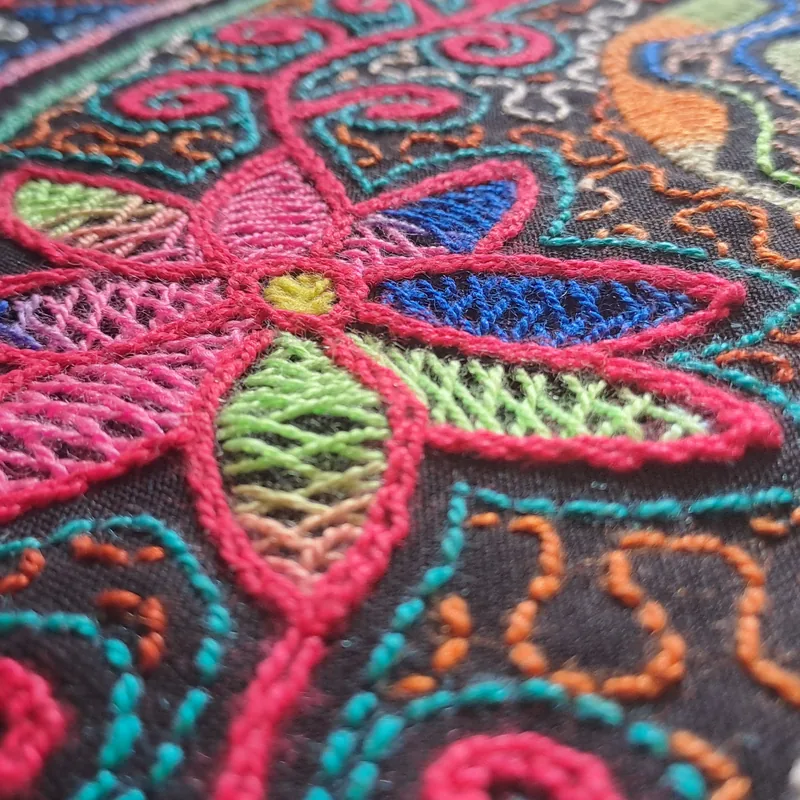
When a woman is bordando, in her thought are the rivers, the fish, the ancestors. She feels she is inside the forests, she connects with the ancestral world. Demer
The embroidery is a meditation. The cloth is what remains after the meditation is over.
Stay close
Work comes from Pucallpa a few pieces at a time. Leave your email for first access to each release.